Blog
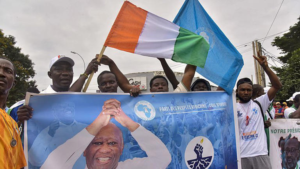
Ivory Coast bars Laurent Gbagbo and key opposition leader from presidential race
Namibia and Zambia are set to make cross-border travel between their countries easier by allowing citizens to use national identification
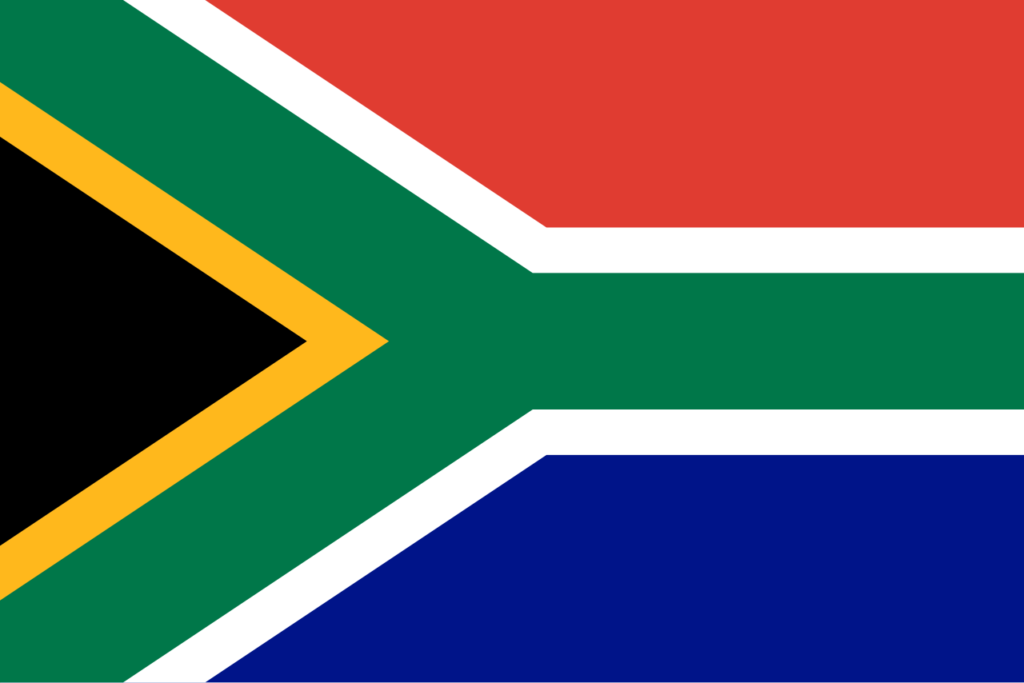
Some of the earliest human remains in the fossil record were found in South Africa. By about A.D. 500, Bantu-speaking groups began settling into what is now northeastern South Africa, displacing Khoisan-speaking groups to the southwest. Dutch traders landed at the southern tip of present-day South Africa in 1652 and established a stopover point on the spice route between the Netherlands and the Far East, founding the city of Cape Town. After the British seized the Cape of Good Hope area in 1806, many settlers of Dutch descent — known then as “Boers,” or farmers, but later called Afrikaners — trekked north to found their own republics, Transvaal and Orange Free State. In the 1820s, several decades of wars began as the Zulus expanded their territory, moving out of what is today southeastern South Africa and clashing with other indigenous peoples and the growing European settlements. The discovery of diamonds (1867) and gold (1886) spurred mass immigration, predominantly from Europe.
The Zulu kingdom’s territory was incorporated into the British Empire after the Anglo-Zulu War in 1879, and the Afrikaner republics were incorporated after their defeat in the Second South African War (1899-1902). Beginning in 1910, the British and the Afrikaners ruled together under the Union of South Africa, which left the British Commonwealth to become a fully self-governing republic in 1961 after a Whites-only referendum. In 1948, the National Party was voted into power and instituted a policy of apartheid -– billed as “separate development” of the races — which favoured the White minority and suppressed the Black majority and other non-White groups. The African National Congress (ANC) led the resistance to apartheid, and many top ANC leaders such as Nelson MANDELA spent decades in South Africa’s prisons. Internal protests and insurgency, as well as boycotts from some Western nations and institutions, led to the regime’s eventual willingness to unban the ANC and negotiate a peaceful transition to majority rule.
Often called “the Rainbow Nation,” South Africa is one of Africa’s most ethnically diverse countries. The land was inhabited by pastoral Khoekhoe (Khoi), the hunter-gatherer San, the Xhosa, the Zulu nations, and various other indigenous tribes when Dutch settlers arrived in the middle of the 17th century, much to the disadvantage of the Khoekhoe along the southern and western coastal strips. It was the beginning of a centuries-long aggressive colonial expansion, mainly by settlers of Dutch, German, and French Huguenot origin.
In 1795 the British took over the Cape from the Dutch; seven years later, the colony was returned to the Dutch government, only to come under British rule again in 1806. This circumstance and the rise to power of the Zulu king Shaka forced many Dutch settlers (the Boers) to move north and east to find new land to establish their republics. The discovery of diamonds (1867) and gold (1886) spurred wealth and immigration and intensified the subjugation of the native inhabitants until the end of the 20th century.
The 1990s brought an end to apartheid with South Africa’s transition to democracy and Nelson Mandela’s inauguration as the country’s first democratically elected President in 1994
The first multi-racial elections in 1994 ushered in majority rule under an ANC-led government. South Africa has since struggled to address apartheid-era imbalances in wealth, housing, education, and health care under successive administrations. President Cyril RAMAPHOSA, who was re-elected as the ANC leader in 2022, has made some progress in reigning in corruption.
Total Area: 1,219,090 sq km | land: 1,214,470 sq km | water: 4,620 sq km
note: includes Prince Edward Islands (Marion Island and Prince Edward Island)
Land boundaries total: 5,244 km.
Border countries (6): Botswana 1,969 km; Lesotho 1,106 km; Mozambique 496 km; Namibia 1,005 km; Eswatini 438 km; Zimbabwe 230 km
Coastline: 2,798 km
Climate: mostly semi-arid; subtropical along east coast; sunny days, cool nights
Pop: total: 60,442,647 | male: 29,664,388 | female: 30,778,259 (2024 est.)
Ethnic groups: Black African 81.4%, Coloured 8.2%, White 7.3%, Indian/Asian 2.7%, other 0.4% (2022 est.)
In terms of cultural organization, the Zambezi valley again provides Mozambique’s key marker, roughly dividing groups that trace their heritage according to principles of matrilineality to the north and groups that order themselves along patrilineal lines to the south. In matrilineal groups, authority rests in the senior male of the extended family traced through the female line, whereas in patrilineal groups the senior male is identified through the male line. Throughout the 20th century, however, many matrilineal groups adopted patrilineality and virilocal settlement, with new families settling in a household of the husband’s lineage rather than the wife’s
Religions: Christian 30%, Muslim 17%, indigenous African and other beliefs 45%.
Prior to independence in 1975, almost one-third of the population was nominally Christian, and a small number were Muslim. Christian missionaries were active throughout the country during the colonial era, and after 1926 the Roman Catholic Church was given government subsidies and a privileged position with respect to its educational and evangelical activities among the African population. Although the Portuguese were generally suspicious of Protestants, Protestant missionaries—Presbyterian, Free Methodist, African Methodist Episcopal, Methodist Episcopal, Anglican, and Congregationalist—remained active, particularly in the northern interior and in the hinterlands of Inhambane and Maputo, providing Africans with alternative medical facilities and boarding schools. A variety of African Independent Churches developed, but, because of official disdain for their activities, they were unlikely to register publicly.
After independence the government, led by the Mozambique Liberation Front (Frente de Libertação de Moçambique; Frelimo), presented conflicting messages regarding religion. Although it confirmed a policy of open and free religious affiliation, Frelimo actively persecuted the country’s more than 20,000 Jehovah’s Witnesses, and its overall political and ideological emphasis discouraged religious expression and organization. By the end of the 1980s, however, Frelimo had changed its approach, and religious organizations began to reemerge as an important popular force.
About one-half of the population now adheres to some form of Christianity, and fewer than one-fifth are Muslims. Although Islamic communities are found in most of Mozambique’s cities, Muslims constitute the majority in only the northern coastal region between the Lúrio and Rovuma rivers. Almost one-fifth of the population claims no religious affiliation.
Languages: Portuguese (official), plus Makhuwa, Sena, Tsonga, Lomwe, Changana.
Literacy: 50%
Life expectancy: 58 years (men) 64 years (women).
https://www.britannica.com/place/Mozambique/Economy
Population distribution
three large populations clusters are found along the southern coast between Maputo and Inhambane, in the central area between Beira and Chimoio along the Zambezi River, and in and around the northern cities of Nampula, Cidade de Nacala, and Pemba; the northwest and southwest are the least populated areas
Mozambique is a poor, sparsely populated country with high fertility and mortality rates and a rapidly growing youthful population – 45% of the population is younger than 15, as of 2020. Mozambique’s high poverty rate is sustained by natural disasters, disease, high population growth, low agricultural productivity, and the unequal distribution of wealth. The country’s birth rate is among the world’s highest, averaging around 5 children per woman (and higher in rural areas) for at least the last three decades. The sustained high level of fertility reflects gender inequality, low contraceptive use, early marriages and childbearing, and a lack of education, particularly among women. The high population growth rate is somewhat restrained by the country’s high HIV/AIDS and overall mortality rates. Mozambique ranks among the worst in the world for HIV/AIDS prevalence, HIV/AIDS deaths, and life expectancy at birth, as of 2022.
Mozambique is predominantly a country of emigration, but internal, rural-urban migration has begun to grow. Mozambicans, primarily from the country’s southern region, have been migrating to South Africa for work for more than a century. Additionally, approximately 1.7 million Mozambicans fled to Malawi, South Africa, and other neighbouring countries between 1979 and 1992 to escape from civil war. Labor migrants have usually been men from rural areas whose crops have failed or who are unemployed and have headed to South Africa to work as miners; multiple generations of the same family often become miners. Since the abolition of apartheid in South Africa in 1991, other job opportunities have opened to Mozambicans, including in the informal and manufacturing sectors, but mining remains their main source of employment.
The first multi-racial elections in 1994 ushered in majority rule under an ANC-led government. South Africa has since struggled to address apartheid-era imbalances in wealth, housing, education, and health care under successive administrations. President Cyril RAMAPHOSA, who was re-elected as the ANC leader in 2022, has made some progress in reigning in corruption.
TPI Rank: 83/180 | Score: 41/100
Highest Score: 45 (2016) Lowest Score: 41 (2023)
Commonwealth Guide to Civil Society Orgs ZA: https://commonwealthfoundation.com/wp-content/uploads/2013/06/Civil_Society_Accountability_Toolkit_South_Africa.pdf
NDA State of Civil Society: https://www.nda.org.za/assets/resources/CF824421-4FA0-41EE-AB69-4DB10CD0384A/Review-of-the-State-of-CSOs-in-SA-NDA-Audit-of-CSOs1.pdf
CIVICUS report 25 years on: https://www.civicus.org/index.php/media-resources/news/civicus-at-25/3531-25-years-later-south-african-civil-society-still-battling-government-in-people-s-interests
Parliamentary Republic
Capitals: Pretoria (administrative capital); Cape Town (legislative capital); Bloemfontein (judicial capital)
Administration: 9 provinces; Eastern Cape, Free State, Gauteng, KwaZulu-Natal, Limpopo, Mpumalanga, Northern Cape, Northwest, Western Cape.
Independence:
31 May 1910 (Union of South Africa formed from four British colonies: Cape Colony, Natal, Transvaal, and Orange Free State).
22 August 1934 (Status of the Union Act).
31 May 1961 (republic declared).
27 April 1994 (majority rule)
Mixed legal system of Roman-Dutch civil law, English common law, and customary law. Post 1996 – Constitution is supreme law.
Has signed the Genocide Convention & jurisdiction of the ICJ jurisdiction declaration; accepts ICC jurisdiction.
Chief of State: President Matamela Cyril RAMAPHOSA (since 15 February 2018); Deputy President Paul MASHSATILE (since 7 March 2023); note – the president is both chief of state and head of government; Deputy President David MABUZA resigned 1 March 2023
Head of Government: President Matamela Cyril RAMAPHOSA (since 15 February 2018); Deputy President Paul MASHSATILE (since 7 March 2023)
Cabinet: Cabinet appointed by the president
Elections/appointments: President indirectly elected by the National Assembly for a 5-year term (eligible for a second term); election last held on 22 May 2019 (next to be held in 2024).
Election results:
2019: Matamela Cyril RAMAPHOSA (ANC) elected president by the National Assembly unopposed.
2014: Jacob ZUMA (ANC) re-elected president by the National Assembly unopposed.
Bicameral Parliament consists of:
National Council of Provinces (90 seats; nine 10-member delegations, each with 6 permanent delegates and 4 special delegates, appointed by each of the 9 provincial legislatures to serve 5-year terms; note – the Council has special powers to protect regional interests, including safeguarding cultural and linguistic traditions among ethnic minorities)
National Assembly (400 seats; half the members directly elected in multi-seat constituencies and half in a single nationwide constituency, both by proportional representation popular vote; members serve 5-year terms)
Elections: National Council of Provinces and National Assembly – last held on 8 May 2019 (next to be held on 29 May 2024)
Election results:
National Council of Provinces – percent of vote by party – NA; seats by party – ANC 29, DA 13, EFF 9, FF+ 2, IFP 1; composition – men 30, women 24, percentage women 44.4%; note – 36 appointed seats not filled.
National Assembly – percent of vote by party – ANC 57.5%, DA 20.8%, EFF 10.8%, IFP 3.8%, FF+ 2.4%, other 4.7%; seats by party – ANC 230, DA 84, EFF 44, IFP 14, FF+ 10, other 18; composition – men 210, women 181, percentage women 46.3%; total Parliament percentage women 46.1%
Address
Parliament Street, Cape Town
PO Box 15, Cape Town, 8000
Tel : +27 (021) 403-2911
Fax: +27 (021) 403-8219
Email: [email protected]
The Parliamentary Monitoring Group, an information service, was established in 1995 as a partnership between Black Sash, Human Rights Committee and Idasa with the aim of providing a type of Hansard for the proceedings of the more than fifty South African Parliamentary Committees for these three advocacy organisations. This was because there is no official record publicly available of the committee proceedings – the engine room of Parliament – and this type of information is needed by social justice organisations to lobby the Parliament of South Africa on pieces of legislation, matters of democratic processes and parliamentary oversight of the executive.
The website was set up at the beginning of 1998 to make the information generated available to a wider audience. Presently this is the only source for this type of information. We hope that the PMG committee reports and other documents will provide the public with an insight into the Parliament of South Africa and its daily activity. Importantly it provides a window into the performance of each government department and public entity over which each parliamentary committee has oversight.
PMG became a fully fledged independent NGO in July 2009.
Address:
By Mail or In Person
2nd Floor
9 Church Square
Parliament Street
Cape Town
8001
South Africa
By Email
Premium Access Information: [email protected]
Monitors Information: [email protected]
Electronic Documents Information: [email protected]
Website Queries and General Information: [email protected]
By Telephone
Tel: +27 (021) 465 8885


Namibia and Zambia are set to make cross-border travel between their countries easier by allowing citizens to use national identification
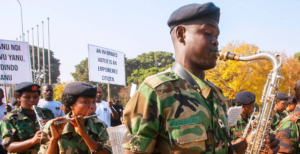
Namibia and Zambia are set to make cross-border travel between their countries easier by allowing citizens to use national identification