
Blog
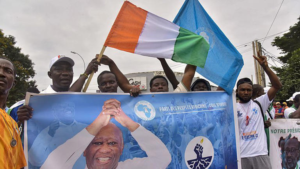
Ivory Coast bars Laurent Gbagbo and key opposition leader from presidential race
Namibia and Zambia are set to make cross-border travel between their countries easier by allowing citizens to use national identification
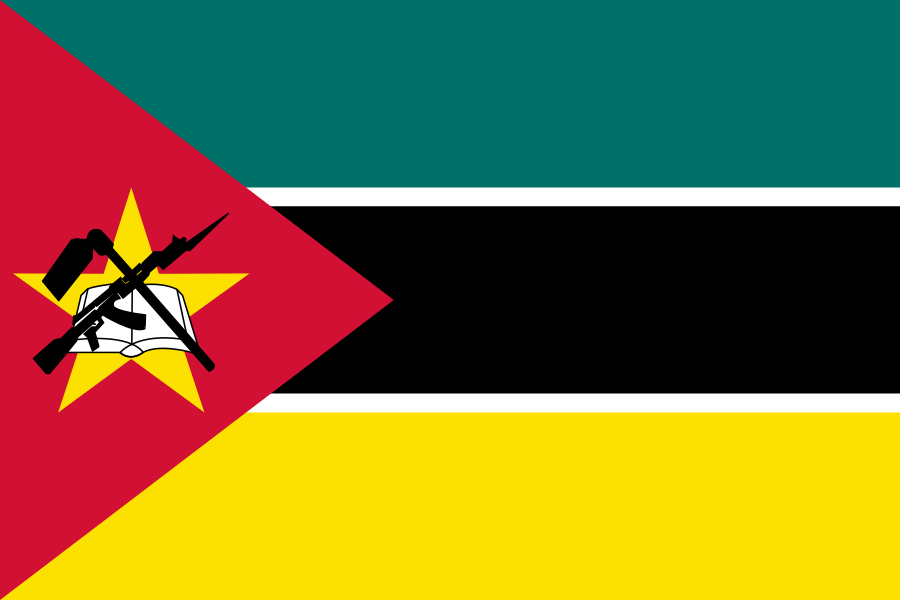
Some key dates in Mozambique’s history:
1498 – Vasco da Gama’s voyage around the Cape of Good Hope marks Portuguese entry into trade, politics, and society of the region.
1500-1700 – Portuguese capture much of the coastal trade from Arab Muslims.
1698 – Arab Muslims seize Portugal’s key foothold on Mombasa Island in Kenya. Subsequently, Mazrui and Omani Arabs reclaim much of the Indian Ocean trade, forcing the Portuguese to retreat south.
19th Century – Lisbon hands over some territories in Mozambique to be ruled by chartered companies like the Mozambique Company.
1880s-1918 – Portugal increases efforts to occupy the interior of the area in the late 19th Century during the so-called “Scramble for Africa”, securing control over most of the territory, despite resistance.
1942 – The Mozambique Company relinquishes territories back to Portuguese control, unifying Mozambique under control of the Portuguese government.
1960 – Mueda massacre. Unknown number of nationalist demonstrators demanding independence in Mueda are shot dead by troops. This fuels support for those calling for independence.
1962 – Mozambique Liberation Front, or Frelimo is formed in Dar es Salaam, Tanzania.
1964-74 – Mozambican war of independence. Armed fighting breaks out as a result of frustration among many Mozambicans who see foreign rule as exploitative.
UN pressures Portugal to decolonise. Portugal threatens to withdraw from NATO, halting pressure from within NATO to quit its African colonies. Nationalist groups in Mozambique turn to the Soviet bloc for aid.
1974 – Following the Carnation Revolution in Lisbon, the new Portuguese government calls for a ceasefire and talks culminating in the Lusaka Accord, handing over power to Frelimo.
1975 – Independence: Frelimo sets up single-party system, leading to civil war.
1977-92 – Mozambican civil war between Frelimo government, with support from Cuba and USSR, and anti-communist Mozambican National Resistance (Renamo) rebels, combined with sabotage from the neighbouring states of Rhodesia and South Africa. Over a million people die in the fighting and subsequent famines.
1990 – Constitution amended to allow multi-party system.
1992 – UN-brokered peace deal ends fighting between Frelimo and the Renamo rebels.
1994 – First multi-party elections.
Overview
In the first half of the second millennium A.D., northern Mozambican port towns were frequented by traders from Somalia, Ethiopia, Egypt, Arabia, Persia, and India. The Portuguese were able to wrest much of the coastal trade from Arab Muslims in the centuries after 1500, and they set up their own colonies. Portugal did not relinquish Mozambique until 1975. Large-scale emigration, economic dependence on South Africa, a severe drought, and a prolonged civil war hindered the country’s development until the mid-1990s.
The ruling Front for the Liberation of Mozambique (FRELIMO) party formally abandoned Marxism in 1989, and a new constitution the following year provided for multiparty elections and a free-market economy. An UN-negotiated peace agreement between FRELIMO and rebel Mozambique National Resistance (RENAMO) forces ended the fighting in 1992. In 2004, Mozambique underwent a delicate transition as Joaquim CHISSANO stepped down after 18 years in office. His elected successor, Armando GUEBUZA, served two terms and then passed executive power to Filipe NYUSI in 2015. RENAMO’s residual armed forces intermittently engaged in a low-level insurgency after 2012, but a 2016 cease-fire eventually led to the two sides signing a comprehensive peace deal in 2019.
Since 2017, violent extremists — who an official ISIS media outlet recognized as ISIS’s network in Mozambique for the first time in 2019 — have been conducting attacks against civilians and security services in the northern province of Cabo Delgado. In 2021, Rwanda and the Southern African Development Community deployed forces to support Mozambique’s efforts to counter the extremist group.
Location: South-eastern coast of Africa, bordering the Mozambique Channel in the Indian Ocean in west.
Area: 801,590 km² (309,495 sq. mi.)
Total: 799,380 sq km
Land: 786,380 sq km
Water: 13,000 sq km
Terrain: Varies from coastal lowlands to high plateau in northwest, mountains in west.
Climate: Varies from sub-tropical to tropical (south to north).
Mozambique lies largely within the tropics, and much of the coastline is subject to the regular seasonal influence of the Indian Ocean monsoon rains. The monsoon influence is strongest in the northeast but is modified somewhat in the south by the island barriers of Madagascar, the Comoros, and the Seychelles. With the exception of highland areas on the northern and western borders and around Gurue (east of the Malawi protrusion into Mozambique), where elevation modifies both temperature and humidity, the climate is seasonal and tropical.
Capital: Maputo
Area: 801,590 sq km
Land boundaries: 4,783 km.
Land border countries (6): Malawi 1498 km; South Africa 496 km; Eswatini 108 km; Tanzania 840 km; Zambia 439 km; Zimbabwe 1,402 km
Coastline: 2,470 km
Border countries: Madagascar, Malawi, South Africa, Swaziland, Tanzania, Zambia, Zimbabwe
Pop: total: 60,442,647 | male: 29,664,388 | female: 30,778,259 (2024 est.)
Ethnic groups: Black African 81.4%, Coloured 8.2%, White 7.3%, Indian/Asian 2.7%, other 0.4% (2022 est.) and other indigenous groups, and approximately 10,000 Europeans, 35,000 Euro-Africans, and 15,000 South Asians.
The people of Mozambique are ethnically diverse, but ethnic categories are fluid and reflect the country’s colonial history. All inhabitants of the country were designated Portuguese in 1961, and some ethnic classifications such as Makua-Lomwe were created by colonial Portuguese officials themselves. Within the country, in addition to the Makua-Lomwe, live the Tsonga, Sena, Ndau (see Shona), Chopi, Chewa, Yao, Makonde, and Ngoni.
In terms of cultural organization, the Zambezi valley again provides Mozambique’s key marker, roughly dividing groups that trace their heritage according to principles of matrilineality to the north and groups that order themselves along patrilineal lines to the south. In matrilineal groups, authority rests in the senior male of the extended family traced through the female line, whereas in patrilineal groups the senior male is identified through the male line. Throughout the 20th century, however, many matrilineal groups adopted patrilineality and virilocal settlement, with new families settling in a household of the husband’s lineage rather than the wife’s
Religions: Christian 30%, Muslim 17%, indigenous African and other beliefs 45%.
Prior to independence in 1975, almost one-third of the population was nominally Christian, and a small number were Muslim. Christian missionaries were active throughout the country during the colonial era, and after 1926 the Roman Catholic Church was given government subsidies and a privileged position with respect to its educational and evangelical activities among the African population. Although the Portuguese were generally suspicious of Protestants, Protestant missionaries—Presbyterian, Free Methodist, African Methodist Episcopal, Methodist Episcopal, Anglican, and Congregationalist—remained active, particularly in the northern interior and in the hinterlands of Inhambane and Maputo, providing Africans with alternative medical facilities and boarding schools. A variety of African Independent Churches developed, but, because of official disdain for their activities, they were unlikely to register publicly.
After independence the government, led by the Mozambique Liberation Front (Frente de Libertação de Moçambique; Frelimo), presented conflicting messages regarding religion. Although it confirmed a policy of open and free religious affiliation, Frelimo actively persecuted the country’s more than 20,000 Jehovah’s Witnesses, and its overall political and ideological emphasis discouraged religious expression and organization. By the end of the 1980s, however, Frelimo had changed its approach, and religious organizations began to reemerge as an important popular force.
About one-half of the population now adheres to some form of Christianity, and fewer than one-fifth are Muslims. Although Islamic communities are found in most of Mozambique’s cities, Muslims constitute the majority in only the northern coastal region between the Lúrio and Rovuma rivers. Almost one-fifth of the population claims no religious affiliation.
Languages: Portuguese (official), plus Makhuwa, Sena, Tsonga, Lomwe, Changana.
Literacy: 50%
Life expectancy: 58 years (men) 64 years (women).
https://www.britannica.com/place/Mozambique/Economy
Population distribution
three large populations clusters are found along the southern coast between Maputo and Inhambane, in the central area between Beira and Chimoio along the Zambezi River, and in and around the northern cities of Nampula, Cidade de Nacala, and Pemba; the northwest and southwest are the least populated areas
Mozambique is a poor, sparsely populated country with high fertility and mortality rates and a rapidly growing youthful population – 45% of the population is younger than 15, as of 2020. Mozambique’s high poverty rate is sustained by natural disasters, disease, high population growth, low agricultural productivity, and the unequal distribution of wealth. The country’s birth rate is among the world’s highest, averaging around 5 children per woman (and higher in rural areas) for at least the last three decades. The sustained high level of fertility reflects gender inequality, low contraceptive use, early marriages and childbearing, and a lack of education, particularly among women. The high population growth rate is somewhat restrained by the country’s high HIV/AIDS and overall mortality rates. Mozambique ranks among the worst in the world for HIV/AIDS prevalence, HIV/AIDS deaths, and life expectancy at birth, as of 2022.
Mozambique is predominantly a country of emigration, but internal, rural-urban migration has begun to grow. Mozambicans, primarily from the country’s southern region, have been migrating to South Africa for work for more than a century. Additionally, approximately 1.7 million Mozambicans fled to Malawi, South Africa, and other neighbouring countries between 1979 and 1992 to escape from civil war. Labor migrants have usually been men from rural areas whose crops have failed or who are unemployed and have headed to South Africa to work as miners; multiple generations of the same family often become miners. Since the abolition of apartheid in South Africa in 1991, other job opportunities have opened to Mozambicans, including in the informal and manufacturing sectors, but mining remains their main source of employment.
(Fun fact: Mozambique is named for the offshore island of Mozambique; the island was apparently named after Mussa al-BIK, an influential Arab slave trader who set himself up as Sultan on the island in the 15th century)
Type: Multi-party democracy.
Independence: 25 June 1975 (from Portugal).
Constitution: 30 November 1990
Mozambique, which gained independence from Portugal in 1975, is still suffering from the effects of a 16-year civil war that ended in 1992.
Tensions remain between the ruling Frelimo party and the former rebel movement Renamo.
In the 21st Century, the economy has been growing – helped potentially by the discovery of offshore gas reserves in 2011 – but the country remains one of Africa’s poorest.
Since 2017, there has been an Islamist insurgency in Cabo Delgado province in northern Mozambique, mainly fought between militant jihadists and the security forces.
Ranked 145/180 | CPI score: 25/100.
Highest score: 31 (2012, 2014, 2015) | Lowest score: 23 (2018)
2007 Country Report https://www.civicus.org/media/CSI_Mozambique_Country_Report.pdf
Partner organisation: JOINT https://joint.org.mz/
Assessment (2014/2015) by Liga de ONGs em Moçambique (JOINT). https://www.civicus.org/images/EENA_Mozambique_English.pdf Findings from the report highlight that the Law on Associations that regulates formation of CSOs needs to be revised to be more specific on issues such as the relationship between civil society and the government at different levels. Other challenges facing CSOs are around access to different funding sources which is hindered by a lack of capacity within CSOs to formulate project proposals as well as CSO not being formally registered, especially in the case of small rural-based organisations. CSOs in Mozambique have also had to fight for the space to have open discussions with governing bodies to influence development policies and legislation.
UNDP (2011) Lessons from implementing CIVICUS CSI index – https://www.undp.org/sites/g/files/zskgke326/files/migration/mz/Participatory-Civil-Society-Assessments-Report.pdf
* 2023: HRW warned that a draft law regulating NGOs and CSOs posed a danger to freedom of association and the freedom to operate. https://www.hrw.org/news/2023/02/10/mozambique-draft-law-threatens-civil-society-groups
Presidential Republic
Constitution: previous 1975, 1990; latest adopted 16 November 2004, effective 21 December 2004
Amendments to the Constitution: proposed by the president of the republic or supported by at least one third of the Assembly of the Republic membership; passage of amendments affecting constitutional provisions, including the independence and sovereignty of the state, the republican form of government, basic rights and freedoms, and universal suffrage, requires at least a two-thirds majority vote by the Assembly and approval in a referendum; referenda not required for passage of other amendments; Constitution amended: 2007, 2018
Mixed legal system of Portuguese civil law and customary law
Mozambique has not submitted an ICJ jurisdiction declaration; non-party state to the ICC.
Chief of State: President Filipe Jacinto NYUSI (since 15 January 2015); note – the President is both Chief of State and Head of Government
Head of Government: President Filipe Jacinto NYUSI (since 15 January 2015); Prime Minister Adriano Afonso MALEIANE (since 3 March 2022); note – President NYUSI removed Prime Minister Carlos Agostinho DO ROSARIO from office on 3 March 2022 as part of a cabinet reshuffle.
Cabinet: Cabinet appointed by the president
Elections/appointments: President elected directly by absolute majority popular vote in 2 rounds if needed for a 5-year term (eligible for 2 consecutive terms); election last held on 15 October 2019 (next to be held on 9 October 2024); prime minister appointed by the president.
Election results:
2019: Filipe NYUSI re-elected president in first round; percent of vote – Filipe NYUSI (FRELIMO) 73.0%, Ossufo MOMADE (RENAMO) 21.9%, Daviz SIMANGO (MDM) 5.1%
2014: Filipe NYUSI elected president in first round; percent of vote – Filipe NYUSI (FRELIMO) 57.0%, Afonso DHLAKAMA (RENAMO) 36.6%, Daviz SIMANGO (MDM) 6.4%
Unicameral Assembly of the Republic or Assembleia da Republica (250 seats; 248 members elected in multi-seat constituencies by party-list proportional representation vote and 2 members representing Mozambicans abroad directly elected by simple majority vote; members serve 5-year terms)
elections: last held on 15 October 2019 (next to be held on 9 October 2024)
election results: percent of vote by party – FRELIMO 71%, RENAMO 23%, MDM 4%; seats by party – FRELIMO 184, RENAMO 60, MDM 6; composition – men 142, women 108, percentage women 43.2%
Endereço: Assembleia da República (AP) | Av 24 de Julho, Nº 3773, Caixa Postal 1516 – Maputo
Contacto: Tel: +258-21-255 100 | Fax: +258-21-400711
E-mail: [email protected]
Website: https://www.parlamento.mz/
Joint – League For NGOs in Mozambique
JOINT is a non-profit organization, with legal personality, financial and asset autonomy, created in 2007 and made official in 2008, with the aim of strengthening the role of Mozambican civil society and its participation in the country’s socio-economic processes and development.
VISION
Connect and strengthen civil society institutions with a view to improving collective action for the common good and dialogue with the Government and the Public Sector.
MISSION
An active Civil Society, engaged and committed to the quality and effectiveness of its actions in favor of social inclusion, socioeconomic development and well-being.
VALUES
According to the JOINT Strategic Plan for the period 2021-2025, our core values are:
1. Social Responsibility: Commitment to the mission of serving the population, avoiding exclusion;
2. Collective Action: Promotion of synergies in interventions.
3. Social Participation: Valuation of all contributions from civil society.
4. Social Justice: Prioritization of equity in tights and duties of all.
5. Transparency and Honesty: Operate with integrity and responsibility.
6. Activism and Associations: Promoting active and collaborative engagement.
7. Multidisciplinarity: Respect for the diversity and specificity of each member.
8. Independence and Impartiality: Impartial and independent decisions.
9. Responsibility: Appropriate and implement the commitments made to the populations.
10. Professionalism: Integrate and responsible approach to all actions.
In the context of strengthening the intervention capacity of Civil Society Organizations in Mozambique, JOINT operates based on the following specific objectives:
1. Promotion and connection of CS actors engaged in defending citizenship rights and freedoms;
2. Sharing and disseminating information about the dynamics and manifestations of SC among members and other development actors;
3. Promoting and strengthening the capabilities of its members with a view to their long-term sustainability;
4. Promotion of a culture of open dialogue, cooperation, and coordination between its members and the Government; as well as with donors and other institutions involved in the country’s development programs;
5. Representation and defense of members’ points of view before institutions and decision-making bodies;
6. Development of regional and international cooperation with similar organizations, within the framework of the solidarity of the peoples of the world region;
7. Contribution to the consolidation of peace and socio-economic development of Mozambique.
CONTACT
Rua da Nachingwea Nr. 568 – Polana Cimento A, Moçambique – Maputo
+258 21 42 31 57
+258 84 554 463


Namibia and Zambia are set to make cross-border travel between their countries easier by allowing citizens to use national identification
Namibia and Zambia are set to make cross-border travel between their countries easier by allowing citizens to use national identification