Namibia

South Africa occupied the German colony of Süd-West Afrika during World War I and administered it as a mandate until after World War II when it annexed the territory.
In 1966 the Marxist South-West Africa People’s Organization (SWAPO) guerrilla group launched a war of independence for the area that was soon named Namibia. This was prompted by the imposition of apartheid on the colony by South Africa. Still, it was not until 1988 that the apartheid regime of South Africa agreed to end its administration in accordance with a UN peace plan for the entire region. Independence came in 1990.

Namibia is a geographically large country with a small population of about 3.0 million (2024) and a 1,500 km-long coastline on the South Atlantic. The driest country in Sub-Saharan Africa, it is rich in mineral resources, including diamonds and uranium, sharing borders with Angola, Botswana, South Africa, and Zambia.

Resource wealth, political stability (or strong governance and institutions), and sound macroeconomic management have helped poverty reduction and allowed Namibia to become an upper-middle-income country. However, socioeconomic inequalities—the legacy of apartheid systems of government in the past—remain extremely high and were worsened by the COVID-19 pandemic. Structural constraints to growth have also hampered productivity gains and job creation. The debt-to-GDP ratio remains elevated, at about 70% of GDP, reflecting low growth, expenditure pressures, and rising debt servicing costs. (WB)


Various ethnic groups occupied southwestern Africa prior to Germany establishing a colony over most of the territory in 1884. South Africa occupied the colony, then known as German South West Africa, in 1915 during World War I and administered it as a mandate until after World War II, when it annexed the territory. In 1966, the Marxist South-West Africa People’s Organization (SWAPO) guerrilla group launched a war of independence for the area that became Namibia, but it was not until 1988 that South Africa agreed to end its administration in accordance with a UN peace plan for the entire region. Namibia gained independence in 1990, and SWAPO has governed it since, although the party has dropped much of its Marxist ideology. President Hage GEINGOB was elected in 2014 in a landslide victory, replacing Hifikepunye POHAMBA, who stepped down after serving two terms. SWAPO retained its parliamentary super majority in the 2014 elections. In 2019 elections, GEINGOB was re-elected but by a substantially reduced majority, and SWAPO narrowly lost its super majority in parliament. President Geingob passed away in February 2024.

Total area: 824,292 sq km | land: 823,290 sq km | water: 1,002 sq km

total land borders: 4,220 km

Bordering countries (4): Angola 1,427 km; Botswana 1,544 km; South Africa 1,005 km; Zambia 244 km

Coastline: 1,572 km

Climate: desert; hot, dry; rainfall sparse and erratic. The coastal Namid desert may be the oldest desert area on Earth (50-80 million years).

Climate: mostly semi-arid; subtropical along east coast; sunny days, cool nights

Pop: total: 60,442,647 | male: 29,664,388 | female: 30,778,259 (2024 est.)

Ethnic groups: Black African 81.4%, Coloured 8.2%, White 7.3%, Indian/Asian 2.7%, other 0.4% (2022 est.)

In terms of cultural organization, the Zambezi valley again provides Mozambique’s key marker, roughly dividing groups that trace their heritage according to principles of matrilineality to the north and groups that order themselves along patrilineal lines to the south. In matrilineal groups, authority rests in the senior male of the extended family traced through the female line, whereas in patrilineal groups the senior male is identified through the male line. Throughout the 20th century, however, many matrilineal groups adopted patrilineality and virilocal settlement, with new families settling in a household of the husband’s lineage rather than the wife’s

Religions: Christian 30%, Muslim 17%, indigenous African and other beliefs 45%.

Prior to independence in 1975, almost one-third of the population was nominally Christian, and a small number were Muslim. Christian missionaries were active throughout the country during the colonial era, and after 1926 the Roman Catholic Church was given government subsidies and a privileged position with respect to its educational and evangelical activities among the African population. Although the Portuguese were generally suspicious of Protestants, Protestant missionaries—Presbyterian, Free Methodist, African Methodist Episcopal, Methodist Episcopal, Anglican, and Congregationalist—remained active, particularly in the northern interior and in the hinterlands of Inhambane and Maputo, providing Africans with alternative medical facilities and boarding schools. A variety of African Independent Churches developed, but, because of official disdain for their activities, they were unlikely to register publicly.

After independence the government, led by the Mozambique Liberation Front (Frente de Libertação de Moçambique; Frelimo), presented conflicting messages regarding religion. Although it confirmed a policy of open and free religious affiliation, Frelimo actively persecuted the country’s more than 20,000 Jehovah’s Witnesses, and its overall political and ideological emphasis discouraged religious expression and organization. By the end of the 1980s, however, Frelimo had changed its approach, and religious organizations began to reemerge as an important popular force.

About one-half of the population now adheres to some form of Christianity, and fewer than one-fifth are Muslims. Although Islamic communities are found in most of Mozambique’s cities, Muslims constitute the majority in only the northern coastal region between the Lúrio and Rovuma rivers. Almost one-fifth of the population claims no religious affiliation.
Languages: Portuguese (official), plus Makhuwa, Sena, Tsonga, Lomwe, Changana.
Literacy: 50%

Life expectancy: 58 years (men) 64 years (women).

https://www.britannica.com/place/Mozambique/Economy 

Population distribution

three large populations clusters are found along the southern coast between Maputo and Inhambane, in the central area between Beira and Chimoio along the Zambezi River, and in and around the northern cities of Nampula, Cidade de Nacala, and Pemba; the northwest and southwest are the least populated areas

Mozambique is a poor, sparsely populated country with high fertility and mortality rates and a rapidly growing youthful population – 45% of the population is younger than 15, as of 2020. Mozambique’s high poverty rate is sustained by natural disasters, disease, high population growth, low agricultural productivity, and the unequal distribution of wealth. The country’s birth rate is among the world’s highest, averaging around 5 children per woman (and higher in rural areas) for at least the last three decades. The sustained high level of fertility reflects gender inequality, low contraceptive use, early marriages and childbearing, and a lack of education, particularly among women. The high population growth rate is somewhat restrained by the country’s high HIV/AIDS and overall mortality rates. Mozambique ranks among the worst in the world for HIV/AIDS prevalence, HIV/AIDS deaths, and life expectancy at birth, as of 2022.

Mozambique is predominantly a country of emigration, but internal, rural-urban migration has begun to grow. Mozambicans, primarily from the country’s southern region, have been migrating to South Africa for work for more than a century. Additionally, approximately 1.7 million Mozambicans fled to Malawi, South Africa, and other neighbouring countries between 1979 and 1992 to escape from civil war. Labor migrants have usually been men from rural areas whose crops have failed or who are unemployed and have headed to South Africa to work as miners; multiple generations of the same family often become miners. Since the abolition of apartheid in South Africa in 1991, other job opportunities have opened to Mozambicans, including in the informal and manufacturing sectors, but mining remains their main source of employment.

The first multi-racial elections in 1994 ushered in majority rule under an ANC-led government. South Africa has since struggled to address apartheid-era imbalances in wealth, housing, education, and health care under successive administrations. President Cyril RAMAPHOSA, who was re-elected as the ANC leader in 2022, has made some progress in reigning in corruption.

TPI: ranked 59/180 | CPI: 49/100

Lowest score: 48 (2012); highest score: 53 (2015)

2020: State of civil society and corruption – https://ippr.org.na/wp-content/uploads/2020/10/civil-society-paper.pdf

Namibia is part of the Open Government Partnership 

Civil Society APRM Report Key Highlights: https://www.aprm-au.org/wp-content/uploads/2022/02/Namibia-Key-Highlights-design.pdf 

Report on Youth Unemployment: https://www.aprm-au.org/wp-content/uploads/2021/11/Namibia-des-TARGETED-REVIEW-REPORT.pdf 

APRM Country Review launched on 7 March 2024

Presidential Republic

Chief of state: Acting President Nangolo MBUMBA (since 4 February 2024); Acting Vice President Netumbo NANDI-NDAITWAHNOTE (since 4 February 2024); note – the president is both chief of state and head of government; President Hage GEINGOB died on 4 February 2024, and Vice President MBUMBA was sworn in to run the government until the next presidential election in November 2024

Head of government: Acting President Nangolo MBUMBA (since 4 February 2024); Acting Vice President Netumbo NANDI-NDAITWAHNOTE (since 4 February 2024); Prime Minister Saara KUUGONGELWA-AMADHILA (since 21 March 2015); note – the prime minister is appointed by the president to coordinate the work of the cabinet, advise the president, and is second in line of succession if the president is unable to serve. 

Cabinet: Cabinet appointed by the president from among members of the National Assembly.

Elections/appointments: President directly elected by absolute majority popular vote in 2 rounds if needed for a 5-year term (eligible for a second term); election last held on 28 November 2019 (next to be held in November 2024

Bicameral Parliament consists of:
National Council (42 seats); members indirectly elected 3 each by the 14 regional councils to serve 5-year terms); note – the Council primarily reviews legislation passed and referred by the National Assembly
National Assembly (104 seats; 96 members directly elected in multi-seat constituencies by closed list, proportional representation vote to serve 5-year terms and 8 nonvoting members appointed by the president)

Election results: National Council – percent of vote by party – NA; seats by party – SWAPO 28, LPM 6, IPC 2, PDM 2, UDF 2, NUDO 1, independent 1; composition – men 36, women 6, percentage women 14.3%

National Assembly – percent of vote by party – SWAPO 65.5%, PDM 16.6%, LPM 4.7%, NUDO 1.9%, APP 1.8%, UDF 1.8%, RP 1.8%, NEFF 1.7%, RDP 1.1%, CDV .7%, SWANU .6%, other 1.8%; seats by party – SWAPO 63, PDM 16, LPM 4, NUDO 2, APP 2, UDF 2, RP 2, NEFF 2, RDP 1, CDV 1, SWANU 1; composition – men 58, women 46, percentage women 44.2%; total Parliament percentage women 35.6%

http://www.parliament.gov.bw/

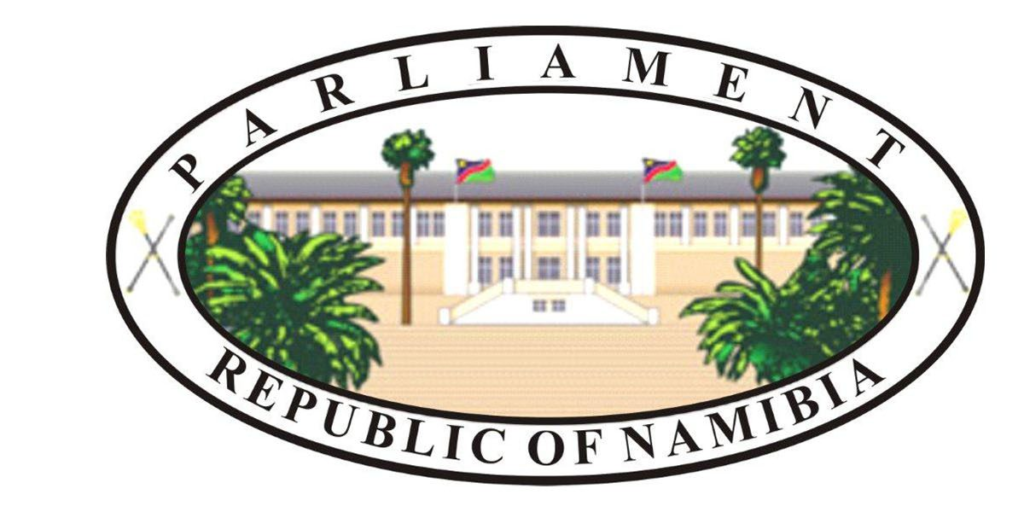
Parliament Building
14A Love Street, Windhoek

View Map

National Assembly

Address: Private Bag 13323, Windhoek

Tel: + 264 61 2889111
Fax: + 264 61 226899

Email: [email protected]

National Council

Private Bag 13371, Windhoek

Tel: + 264 61 2028000

Fax: + 264 61 256371

Email: [email protected]


NANGOF Trust is an umbrella organization of Civil Society Organizations (CSOs) constituted by Non-Governmental Organizations (NGOs), Community-Based Organizations (CBOs), and Faith-Based Organizations (FBOs) in Namibia.

Address

24 Mozart Street, Khomasdal, Windhoek, Namibia

P.O. Box 70433, Khomasdal, Windhoek, Namibia

Phone: +264 61 212 503
Email: [email protected]

www.nangoftrust.org.na

Contact Person: Ivin Lombardt

Country Focus

Angola

Botswana

République démocratique du Congo

Eswatini

Lesotho

Madagascar

Malawi

Mauritius

Moçambique

Namibia

Republic of South Africa

Seychelles

Union of Comoros

Zambia

United Republic of Tanzania

Zimbabwe

Country Updates

Events

Scroll to Top